

I didn’t start using Antigravity because I wanted to create a digital product. I started using it because my head was crowded. Too many ideas, too many half-finished concepts, too many notes that looked smart but didn’t actually go anywhere. I had information, but I didn’t have clarity. That changed the moment I realized Antigravity wasn’t a writing tool or an AI toy. It was a thinking environment. And once I understood that, turning it into a digital product became almost inevitable.
The first shift happened when I stopped asking, “What product should I create?” and started asking, “What problem do people keep asking that never feels fully resolved, even after consuming content about it?” That question matters because digital products that sell well are rarely about novelty. They’re about resolution. Antigravity shines at helping you resolve thoughts that normally stay fuzzy. For me, that unresolved problem was watching people consume endless content about making money online but never actually move forward. They weren’t lazy. They were mentally stuck.
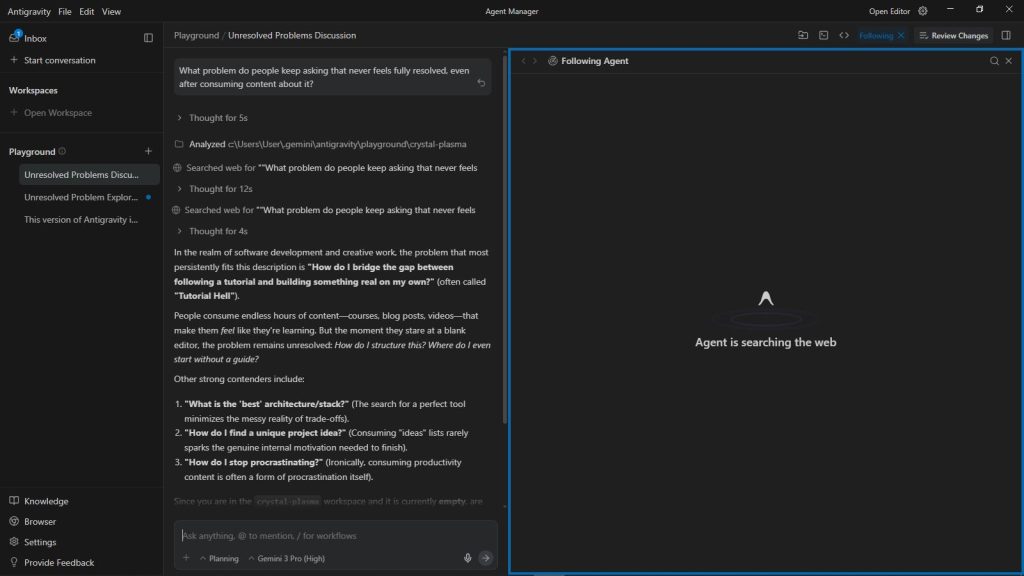
So instead of opening a blank document and trying to write a guide, I opened Antigravity and began mapping the problem itself. I wrote out the confusion as I saw it, the common advice people hear, the contradictions, and the silent assumptions nobody talks about. Antigravity didn’t just generate text. It helped me see relationships. Patterns. Gaps. Within a single session, I could see that the real issue wasn’t strategy. It was decision paralysis caused by unclear thinking.
That’s when the product idea revealed itself naturally. I wasn’t going to create another “how to make money online” guide. I was going to create a clarity product. Something that helped people think better before they acted.
Using Antigravity, I broke the problem down into layers. The surface layer was tools and tactics. Under that was fear of choosing the wrong path. Under that was identity confusion. Under that was unrealistic timelines. Each layer became a section. Not because I forced a structure, but because the thinking demanded it. This is the biggest advantage of Antigravity: structure emerges instead of being imposed.
Once I had the thinking laid out, turning it into a digital product felt almost mechanical. I wasn’t inventing content. I was refining insight. I rewrote the ideas in simple language, removed anything that sounded clever but wasn’t useful, and focused on helping the reader reach decisions faster. I kept asking myself one question: “Does this reduce mental friction?” If the answer was no, it didn’t make it into the product.
I chose a written format on purpose. No video. No slides. No fluff. A clean, focused guide that someone could read in an hour and feel mentally lighter afterward. Antigravity made this easy because it already organized my thoughts in a way that flowed logically. Editing became about tightening, not creating.
What surprised me most was how easily the product positioned itself. I wasn’t selling information. I was selling clarity. I wasn’t promising income. I was promising relief from confusion. That distinction matters. People are exhausted from information. They’re starving for sense-making. Antigravity naturally pushes you toward that kind of value because it rewards depth over noise.
Pricing the product also became clearer once I understood what I had created. This wasn’t a massive course. It wasn’t a cheap checklist either. It sat comfortably in the low-to-mid range because it saved people time, energy, and second-guessing. When your product helps someone decide, it’s worth more than something that just teaches.
Another unexpected benefit was repurposing. Every section of the product became raw material for content. Short insights for social posts. Hooks for emails. Talking points for videos. Because everything came from structured thinking, nothing felt forced. Antigravity didn’t just help me create one product. It helped me create a content ecosystem around it.
If there’s one lesson I’d pass on from this experience, it’s this: don’t use Antigravity to create content. Use it to resolve tension. Start with a problem that genuinely bothers you. Let the thinking run deep. Follow the logic wherever it goes. When clarity appears, package it. That package is your digital product.
You don’t need a massive audience. You don’t need fancy design. You don’t need to be the world’s top expert. You just need to think more clearly than the person you’re helping. Antigravity gives you that edge if you let it.
Creating a digital product this way feels less like manufacturing and more like distillation. You’re boiling down confusion into insight. Noise into signal. Overthinking into action. And once you experience that process, it’s hard to go back to creating products the old way.
If you’ve been sitting on ideas, notes, and half-finished drafts, Antigravity isn’t the tool that will push you to create more. It’s the tool that will help you finally finish something that matters.